

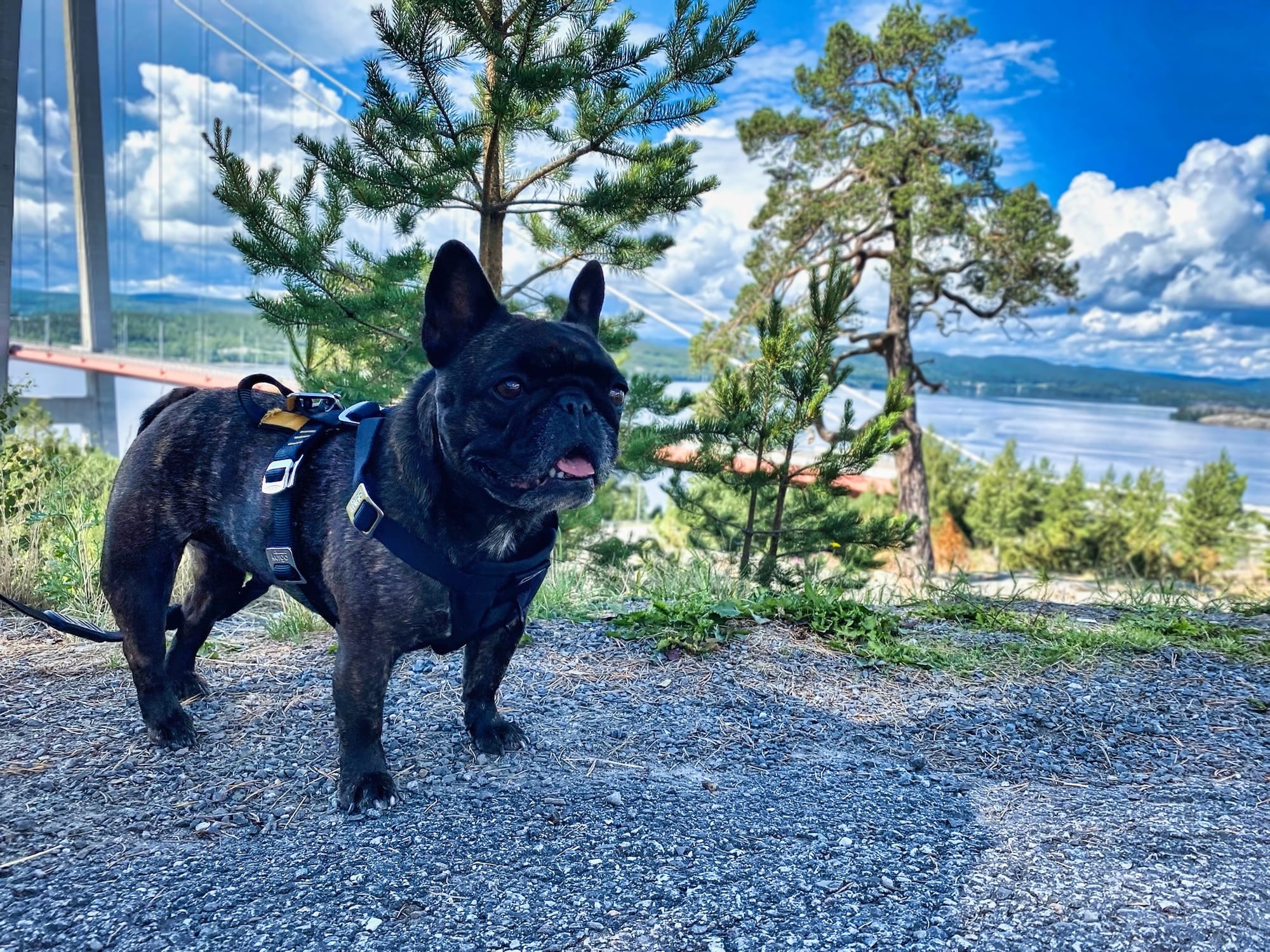

As we end the early morning phone call with the vet, I let out a deep cry of anguish. It's happening now. It's startling and jarring. The speed of it. How we won't be there with her when she's put to sleep. How my body reacts. Out of control. Spasmodically. My face contorted in grief. Eyes and nose a snotty, blubbery mess. Gasping for air…
All around us are Rusa's belongings, her bed, her food bowls, her leash, her stuffed toys. But Rusa will never return to them.
The decisive phone call comes on Thursday, and by then Rusa has been unwell since Monday. She was clearly in pain and her hind legs weren't quite keeping up. She would sit up, struggling to lie down. She became restless, wanting to move around because the pain was uncomfortable, but walking was difficult. She avoided our touch. Tried to hide, as she would when she didn't want to show her pain. As if ashamed.
Sweet, sweet Rusa.
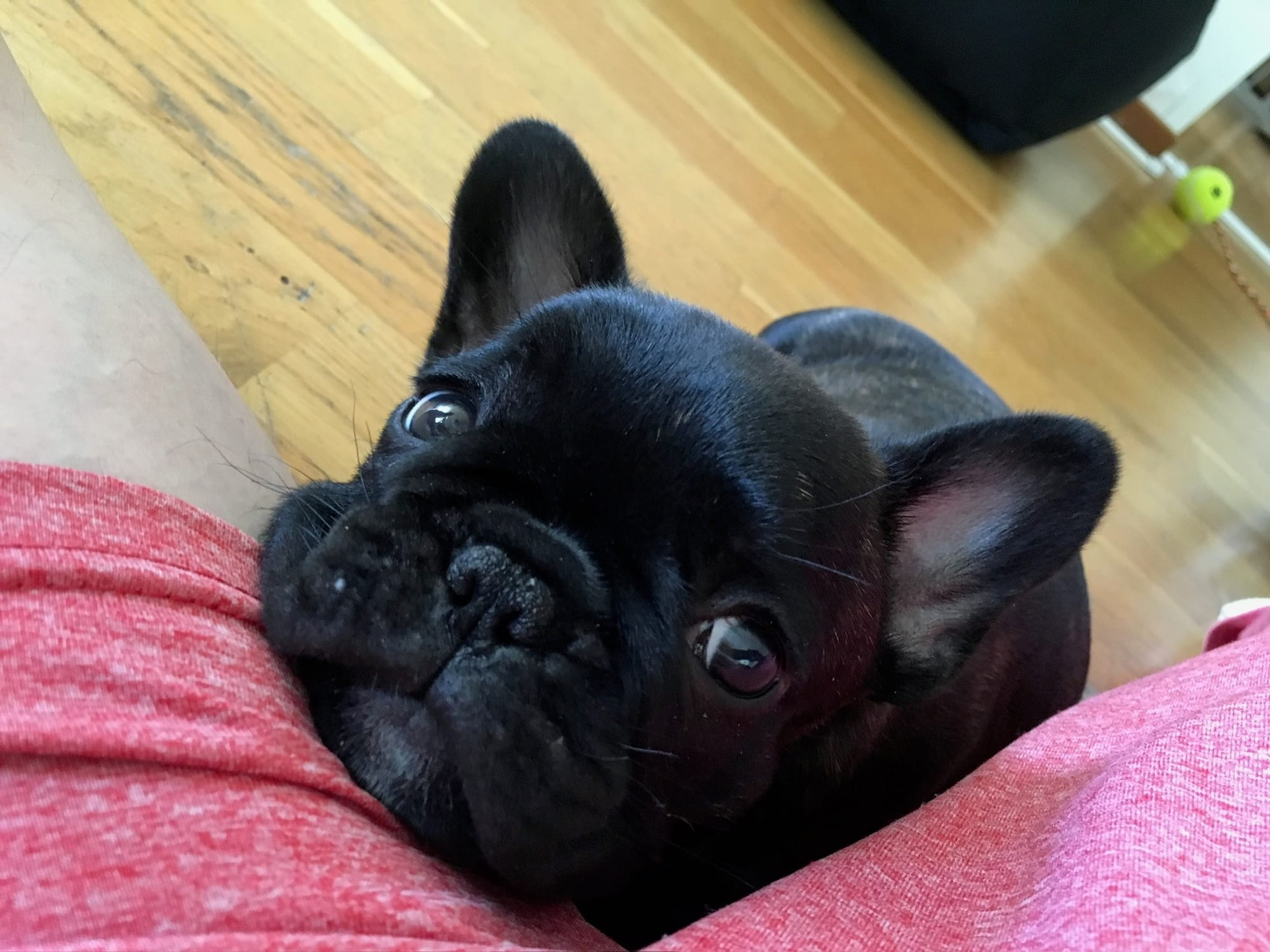
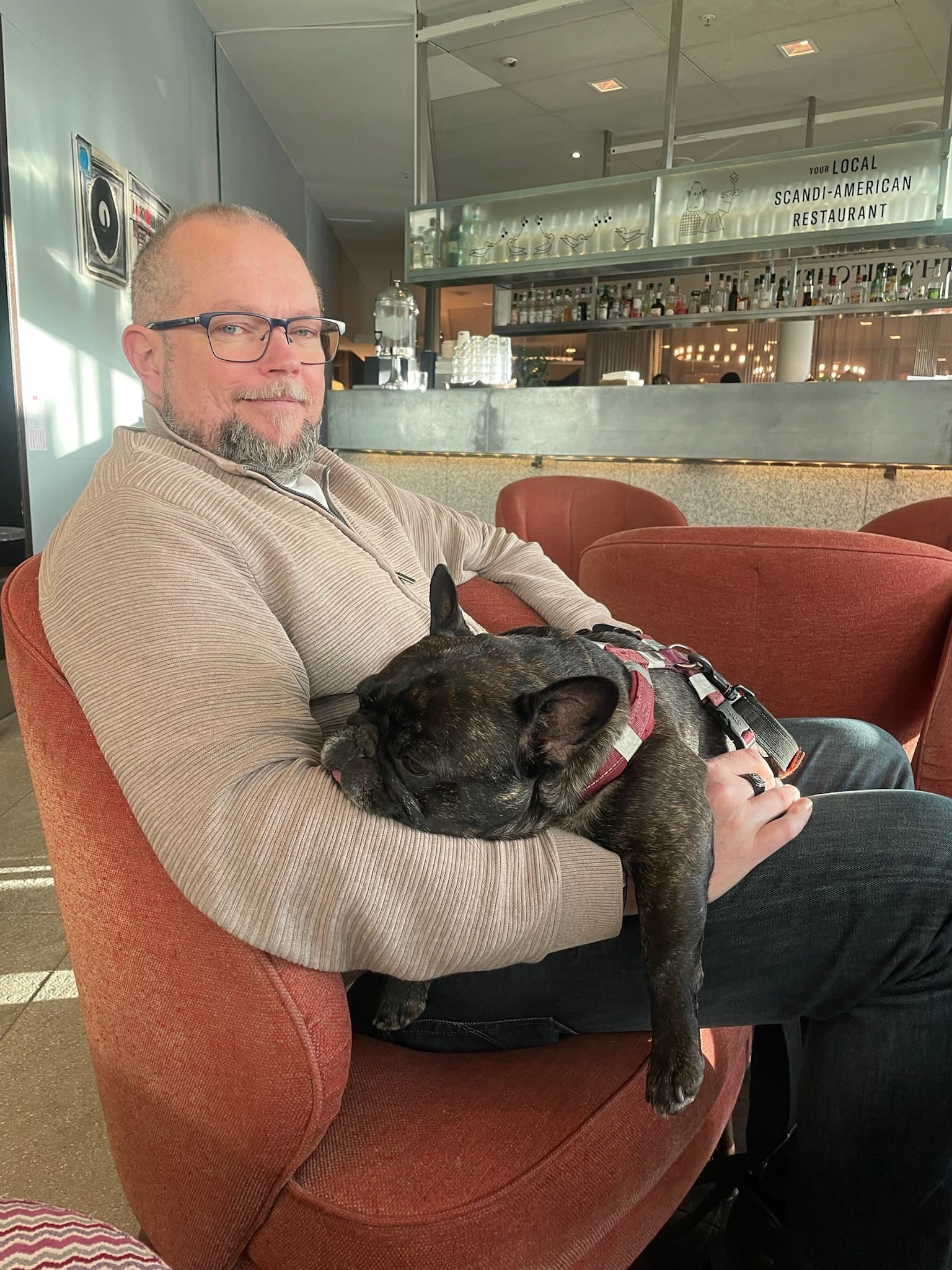
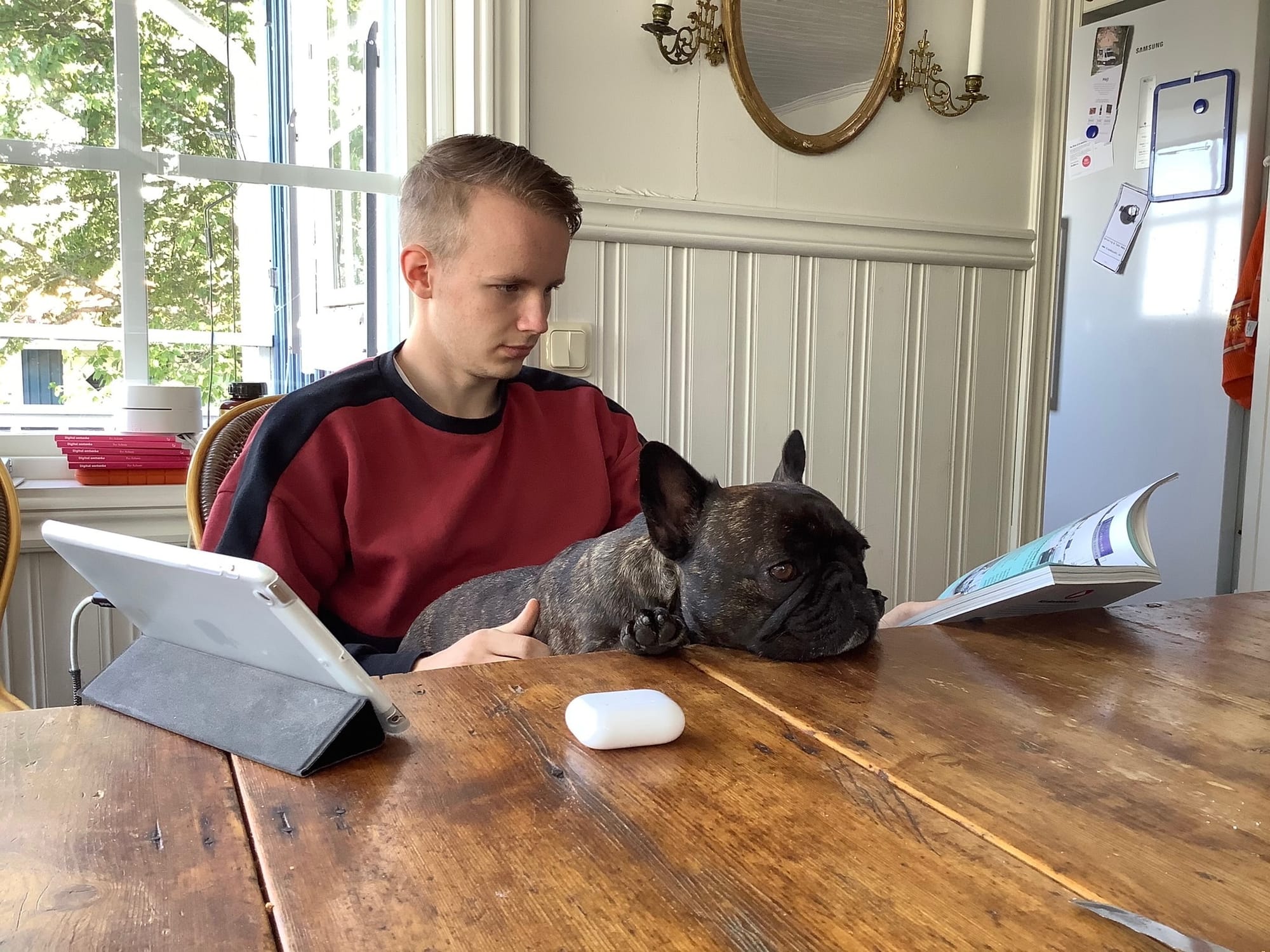
Human intimacy has always been a strong need for Rusa.
She has demanded an extraordinary amount of intimacy. And we offered it. She has slept in our bed, sat on our laps at the dining table when we played board games and hung out with friends, rested on our legs on the sofa as we worked and watched TV. Leaving her alone simply didn't work, so she came along with us everywhere. Thanks to a wonderful day carer who also provided that closeness a few times per week, we managed to make our everyday lives work.
We go back and forth to a veterinary clinic on Monday. Rusa is given pain relief. First morphine, and then strong pills from us. But none of it is helping as expected. We're back on Tuesday for another morphine injection. A small glimmer of hope on Tuesday evening when she seems a little better, eats some food and is able to relax a bit. But on Wednesday after lunch, despite large doses of pain medication, she is noticeably suffering. We understand more and more of the tells we wish weren't there. We don't dare say it out loud.
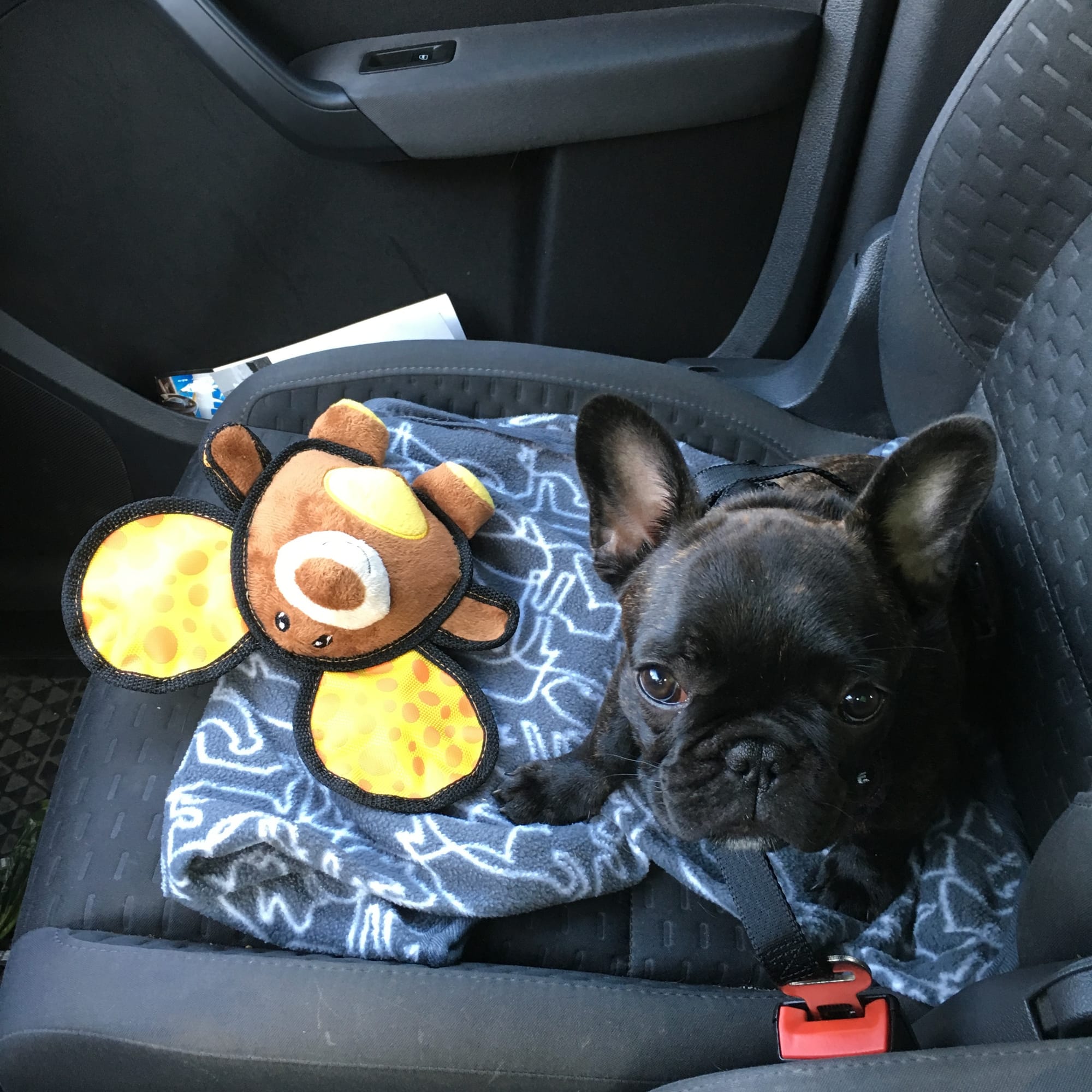
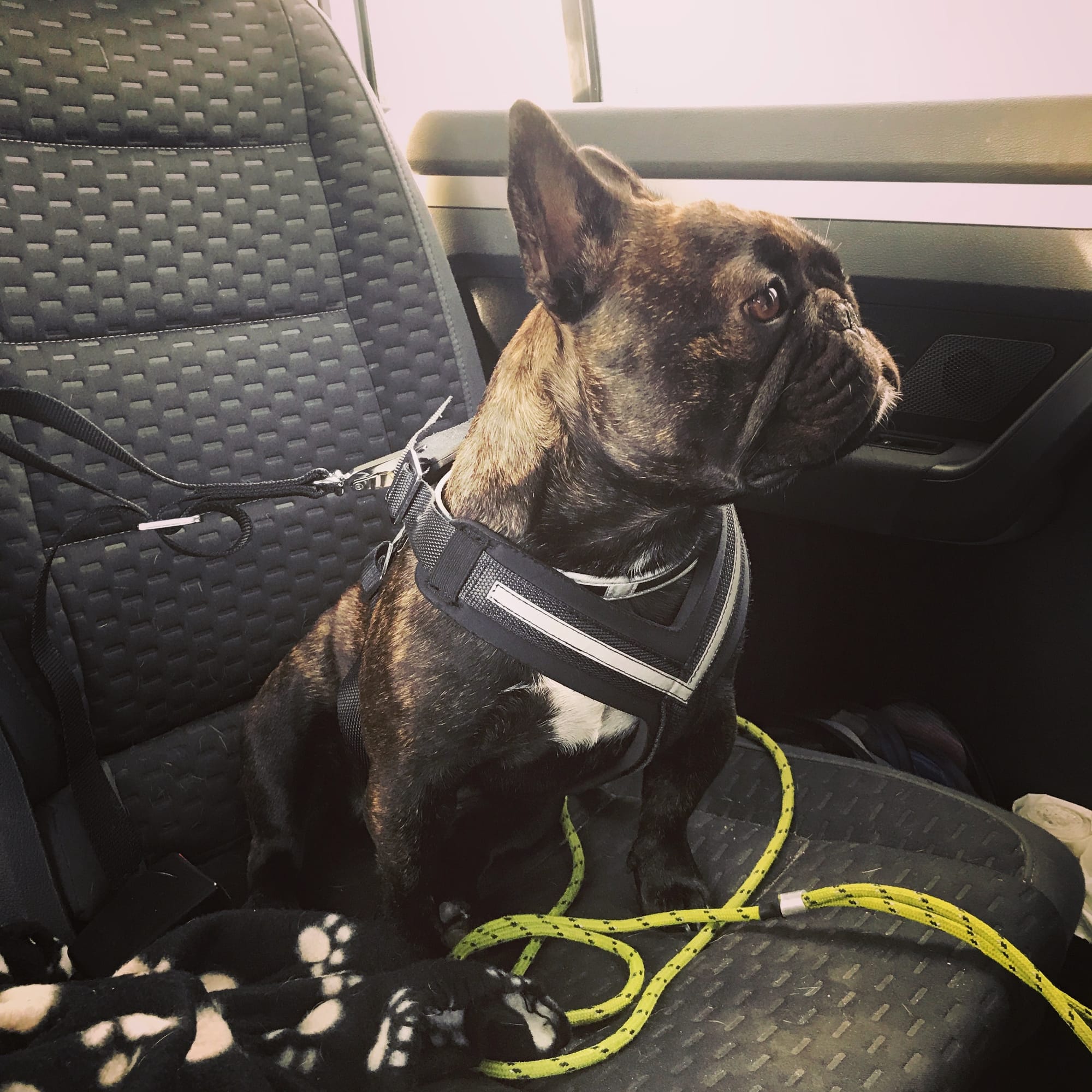

Rusa never had any problem with riding in the car. Well, maybe if were going too slow.
Rusa always loved riding in the car. Her first journey with the whole family was many hours from Värmland to Stockholm. In that small space she also has us in her sights, knows we won't stand up and walk out. As a relatively small dog, Rusa sits or lies in the back seat with a car harness, she's not in the boot/trunk. Well, if there's a person there, she's of course somehow on their lap. Most important: she's with us. And at every sudden brake, sharp turn and unexpected pothole, I think about her sitting right behind me.
On Wednesday we find ourselves at Animed, a new animal hospital in Sundbyberg, and immediately trust the vet. We agree to try to ease her pain, with the unspoken understanding that we're preparing to say goodbye. But fentanyl's potency means she has to stay and be monitored at the hospital. She remains there.
Without knowing what will follow, we kiss her gently and tearfully thank her for all the joy and love she has given us. The nurse carries her out of the room, and that is the last time we see her alive.
Ten years of closeness affects all of daily life, who we are and how we act.
- How we sleep, ready to open the patio door when she needs to pee.
- How we leave the bedroom door ajar so she can get in and out to drink water.
- The reason we move from the breakfast table to the sofa when she glares at us, her paws buried in the armrest, both stern and demanding.
- How I let her out to run and meet her mum when she's about to arrive home.
- How we pick her up to carry her when the weather is too warm and the walk too long.
- How I build ramps so she can avoid the outdoor steps after she developed back problems.
- How we plan every week around drop-offs and pick-ups at her day carer.
- How we choose restaurants and accommodation on our travels.
- How I long for the happy yap when I get home and open the door.
We wake early on Thursday. Now we speak out loud about that which has become unavoidable. It's time to let her cross The Rainbow Bridge. Shortly after, at quarter past seven, the vet calls. He tells us that just before he arrived at the hospital, Rusa had started convulsing. She was quickly looked after by the night staff, and sedated. But the vet is worried she will wake again, convulse again, suffer. He advises us to let him give the injection without waiting any longer.
I suppose it only takes a few seconds to understand and confirm what he's saying through the shock and through our tears, but it all happens in a blur. In slow motion.
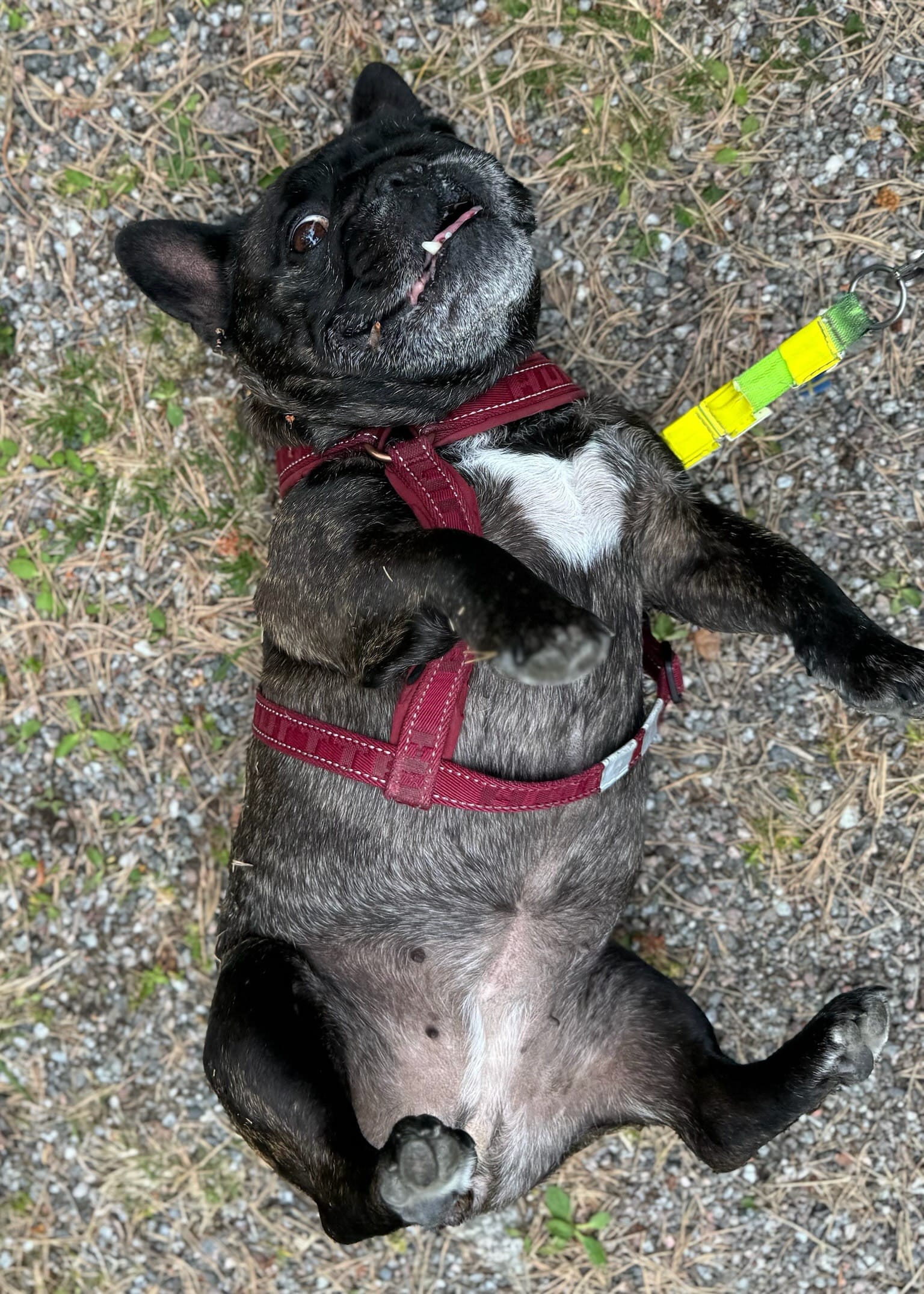
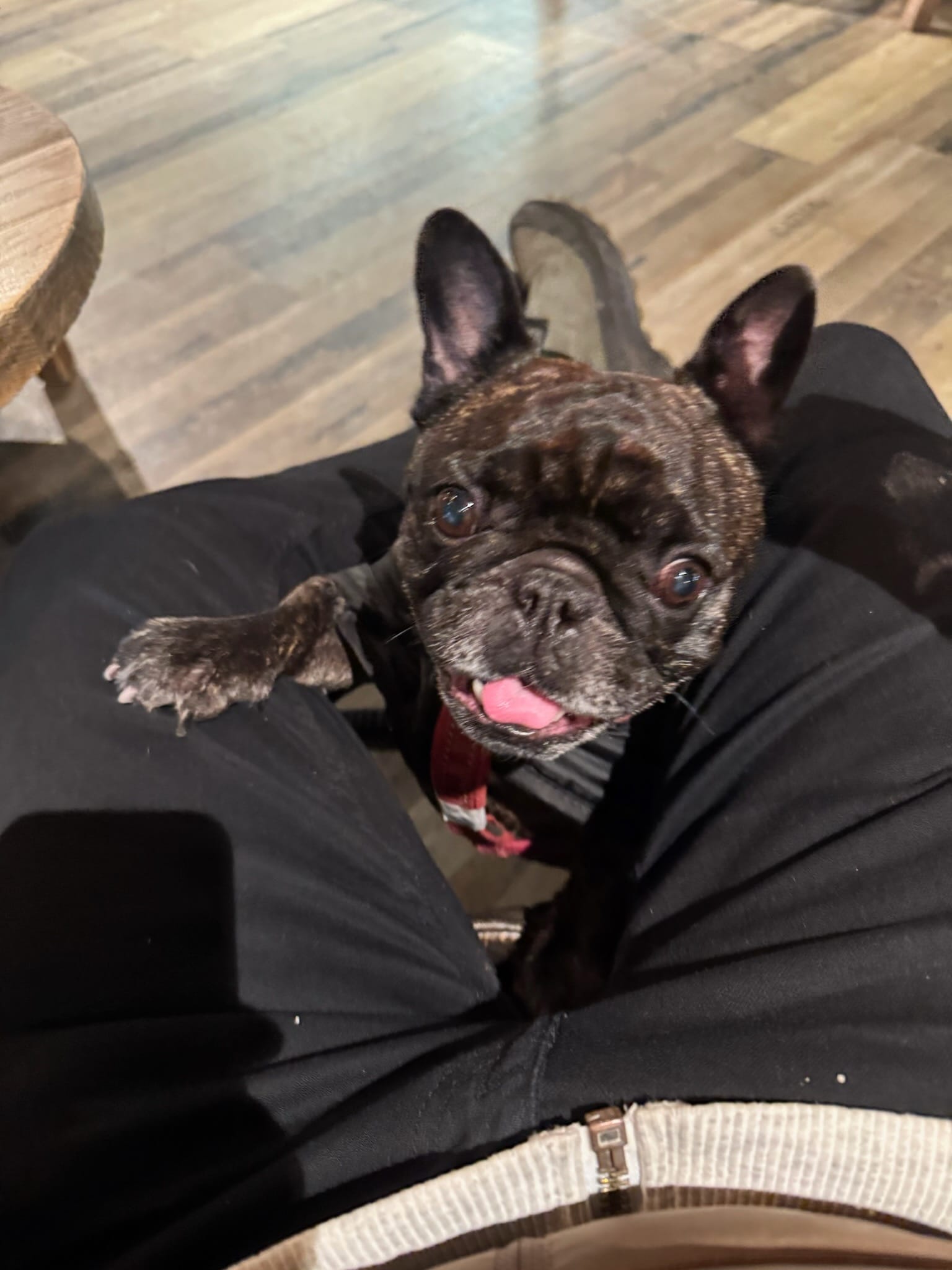
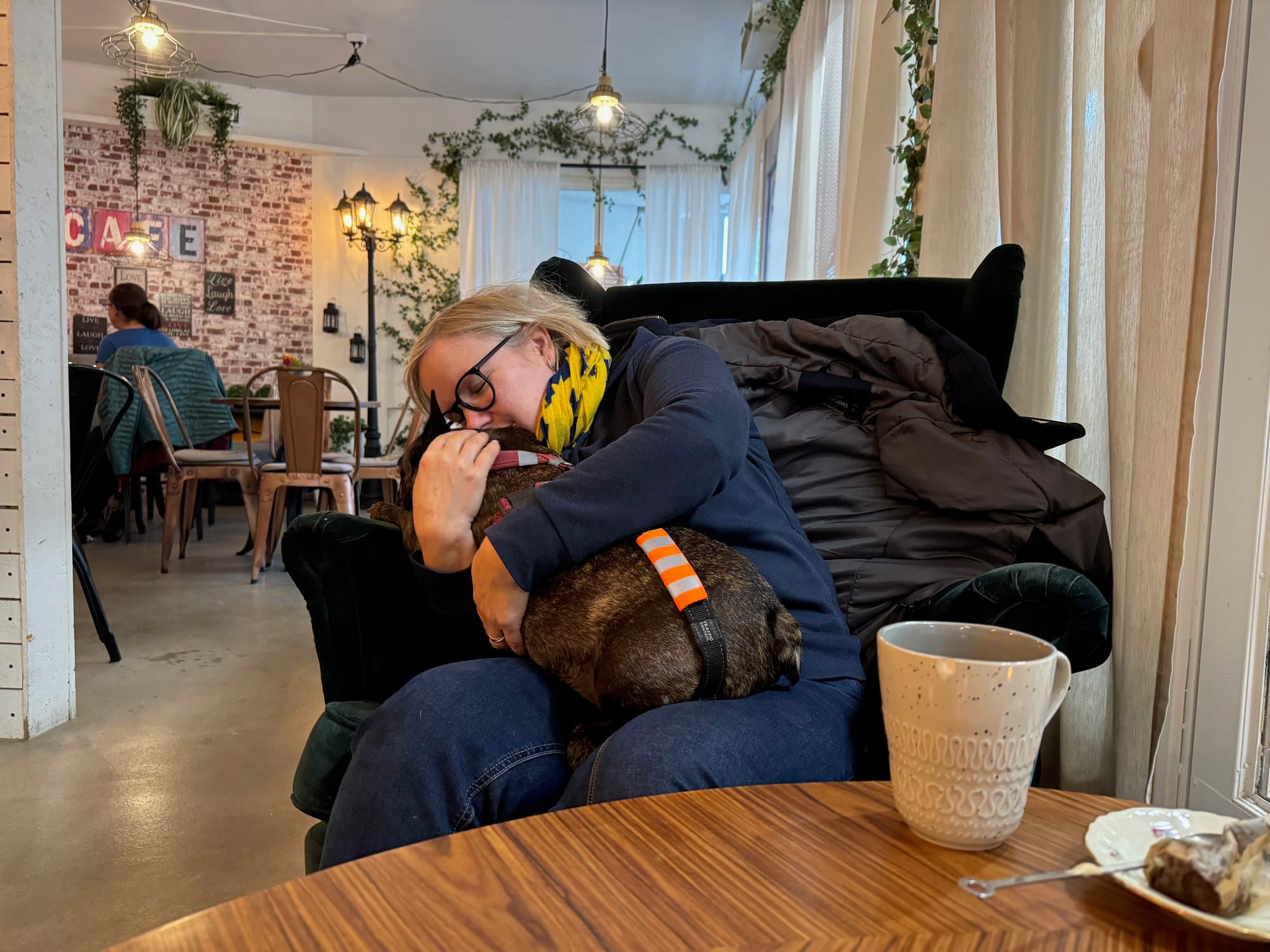
Our Rusa had many little quirks, and we love every single one.
Rusa was an inimitable dog when she…
- Threw herself onto her back to rub herself in the spring grass or for us to scratch her belly.
- "Swam" around on the rugs in the shops at Bromma Blocks (a shopping centre where you're allowed to bring your dog) to scratch her own stomach.
- Loved leading us back to bed after the morning bathroom trip so we could stay and cuddle until 11 on weekends. Oh, how that little tail wagged when she realised more cuddling was on the way!
- Stopped abruptly and refused to go in any direction, and taking forever on walks to stubbornly stop and sniff at everything, both delicious and disgusting. Rabbit droppings were like bonbons.
- Refused to come inside because she'd found a little patch of sunlight she wanted to stay in.
- Came home and ran around searching every room for her mum, whether she was home or not.
- Tugged and pulled because she wanted to go to a café she liked, where she knew there would be crumbs on the floor and a chance to sit on someone's lap.
She was definitely demanding in many ways, but she was our demanding dog, and we found a way of being that shaped us all and gave an enormous amount of tenderness and affection and love in return.
We came to the hospital after she had passed, to say goodbye. The whole course of events was of course far from what we had once imagined, but we did what was best in the circumstances we found ourselves in. It was important and something we were grateful for, having this final meeting. Closure. An occasion to begin sharing memories from her time with us.
The pain of losing her will take a long time to fade, and will of course never completely disappear. I see her movements in the corner of my eye and turn around before I remember she isn't there. I'm loading the dishwasher and something feels wrong, and I realise the food bowls are missing. I sit at the breakfast table waiting for her to bring me to the sofa. The bark that announces she wants a dental chew when we are having dinner doesn't come. I brake the car gently over the bumps and remember that she is no longer sitting right behind me.
I sit here writing this text and she isn't pressed up against me.
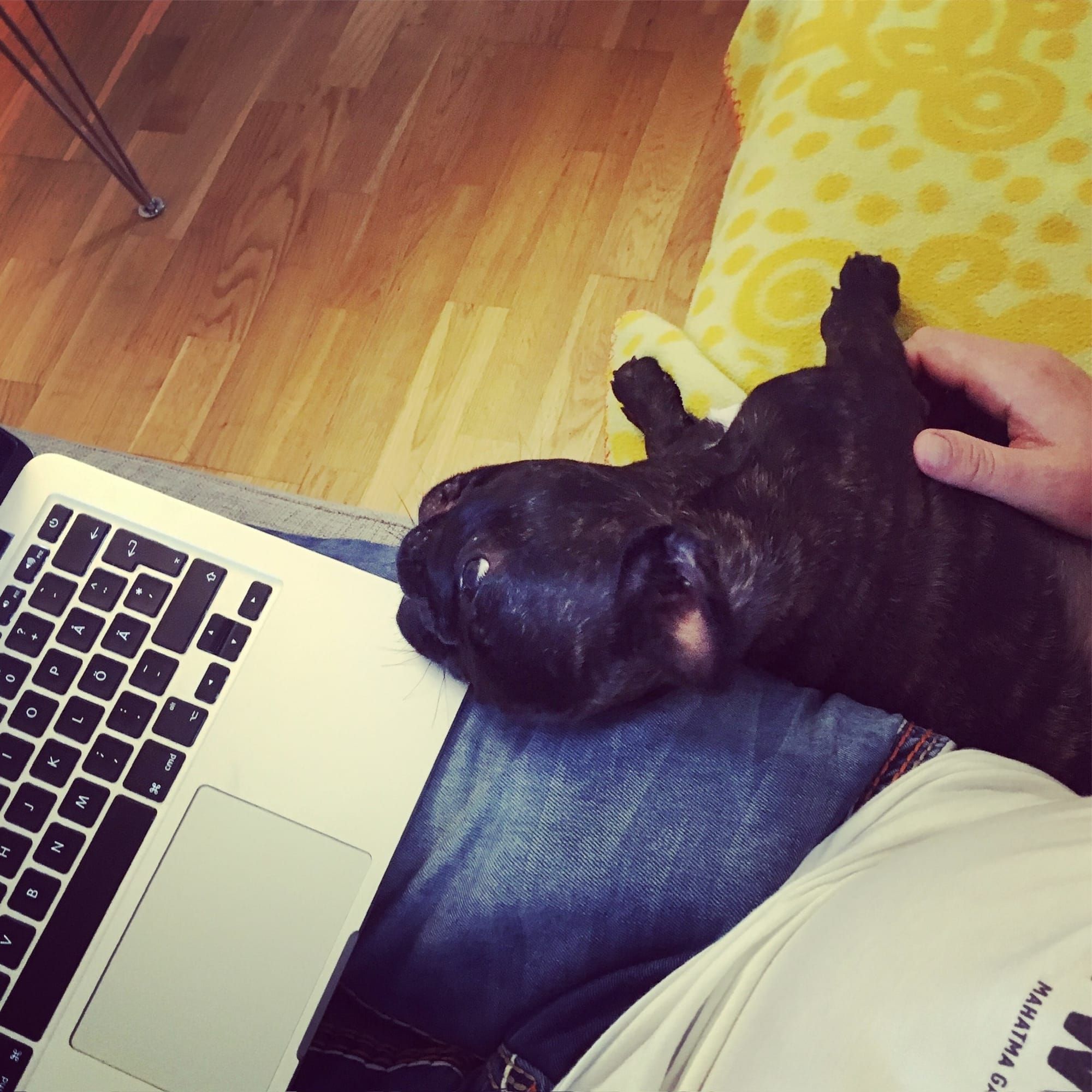
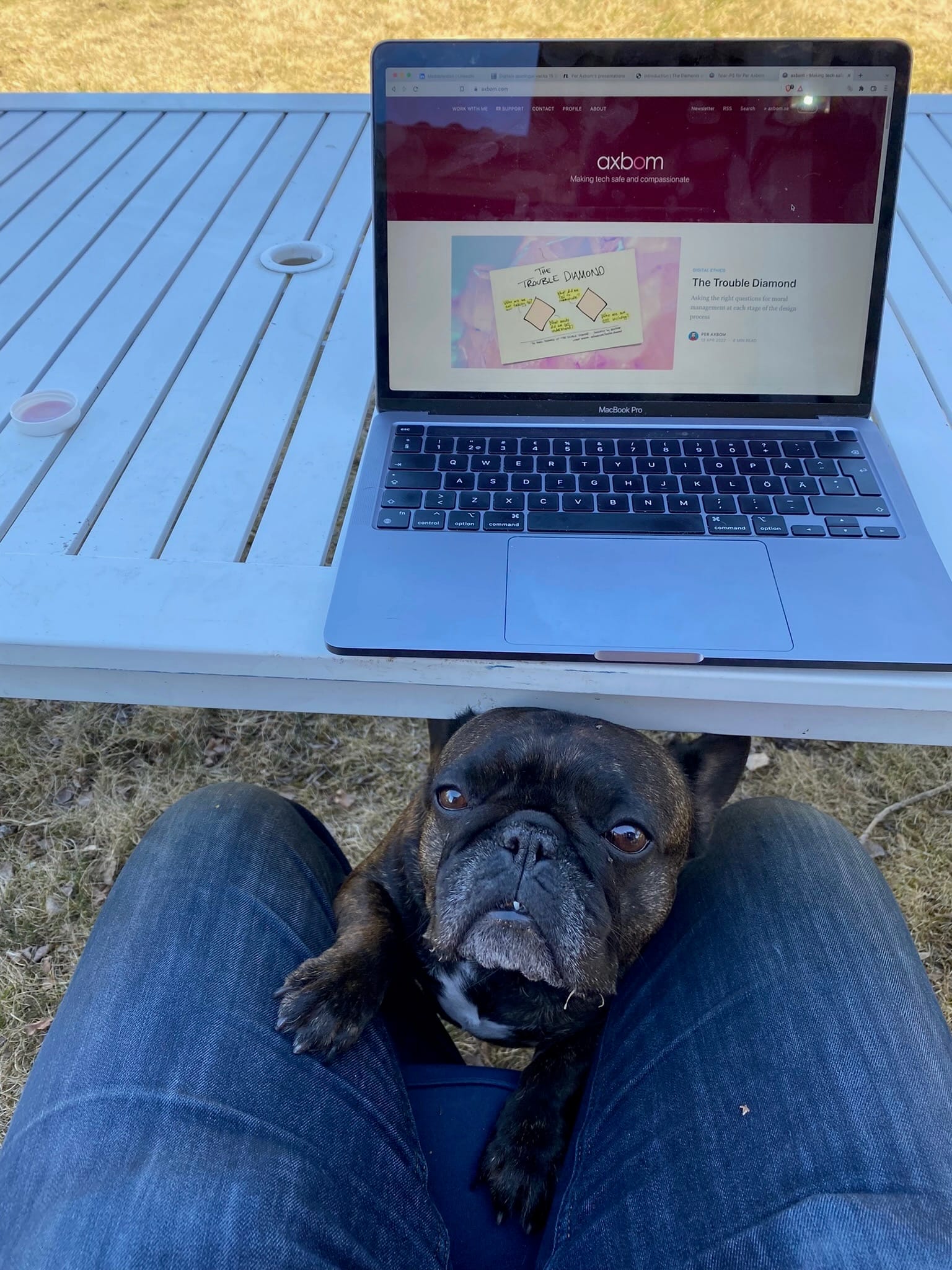
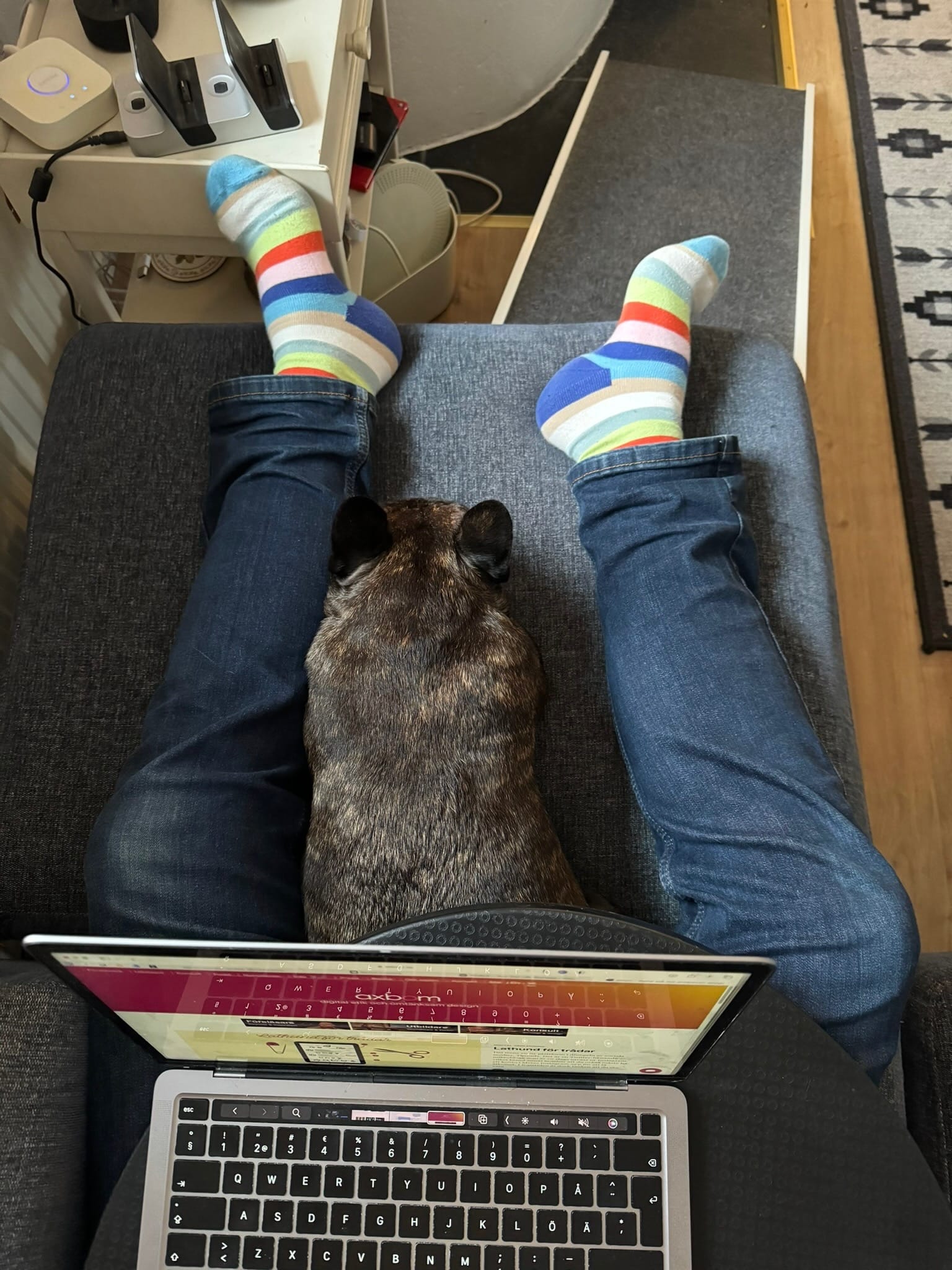
If I was writing on the computer Rusa was right there with me.
I want you to know, dear reader, that for almost ten years Rusa has lain on or close beside me while I have written nearly every essay and newsletter on this blog. She affects me, and she influences my choice of words. She forces breaks for reflection on me that improve my writing. She provides warmth and care that put me in the right frame of mind.
So I promise to make the effort to take to heart what she has taught me and what she has drawn out of me through her presence. To write more kind-heartedly, and with even greater care. And of course I already know that her impact on my writing will live on, right up to my own final word.
Because this love simply is that strong.