

Coming soon, you will be able to support my work and gain access to high-resolution templates and original guides.
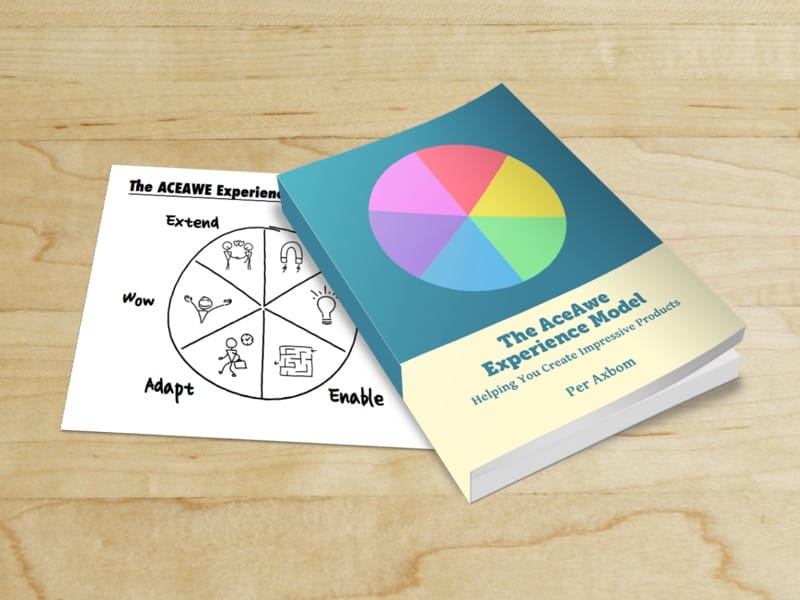
E-book: The AceAwe Experience Model
Helping you create impressive products. An easy-to-follow structure for managing experience-oriented design and truly helping the people you want to reach.
Welcome the new way of understanding humans — as people who trust their intuition when they can’t be bothered reading all the information, make poor decisions when they are emotional, and want to buy things from you because you have a nice attitude and share an interest in cats.
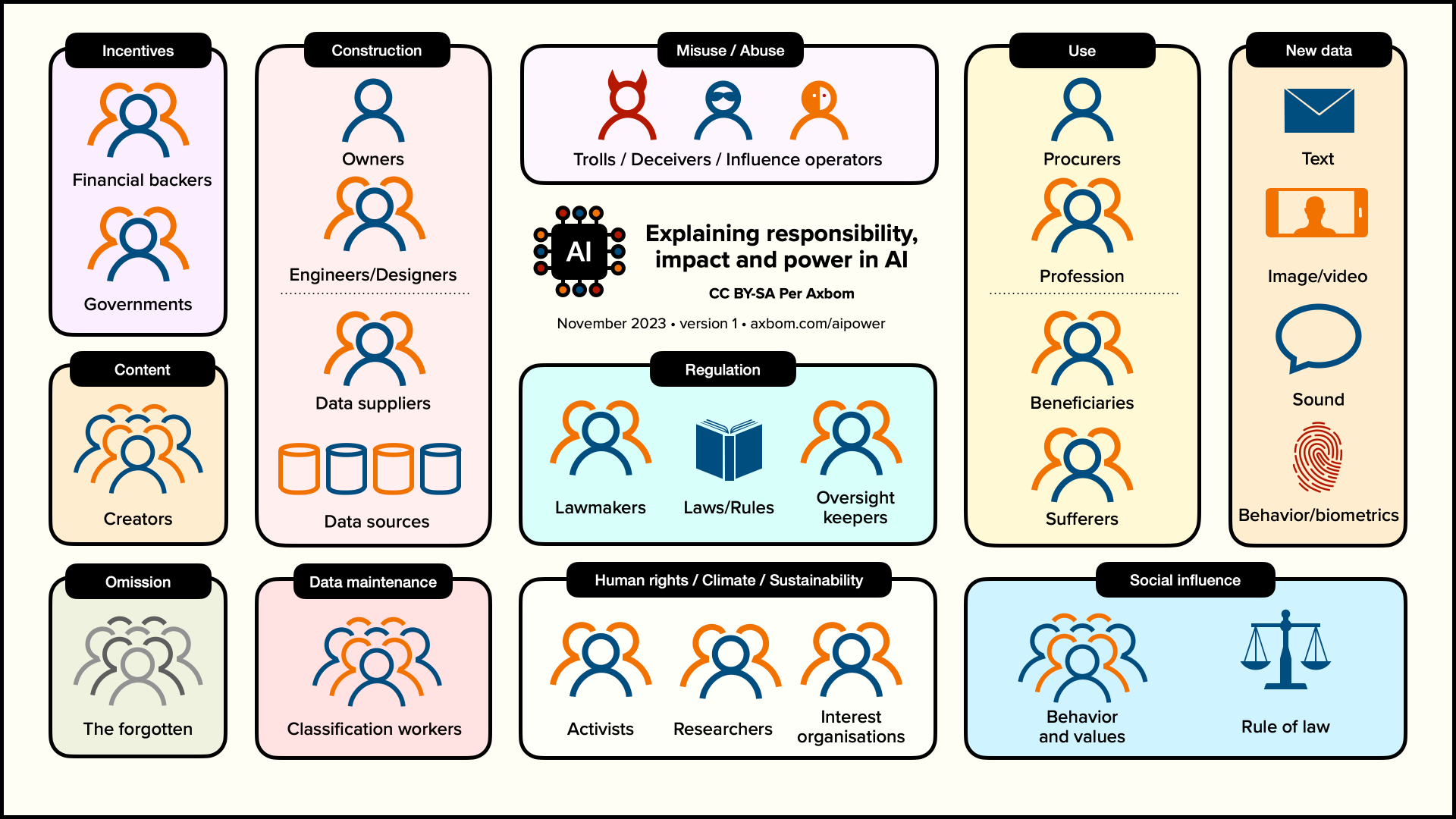
Explaining responsibility, impact and power in AI
An explanatory model for showing the relationships between different actors when in AI development and use. It provides structure for discussion and reflection around who finances the systems, who contributes to the systems and who benefits or suffers from them.
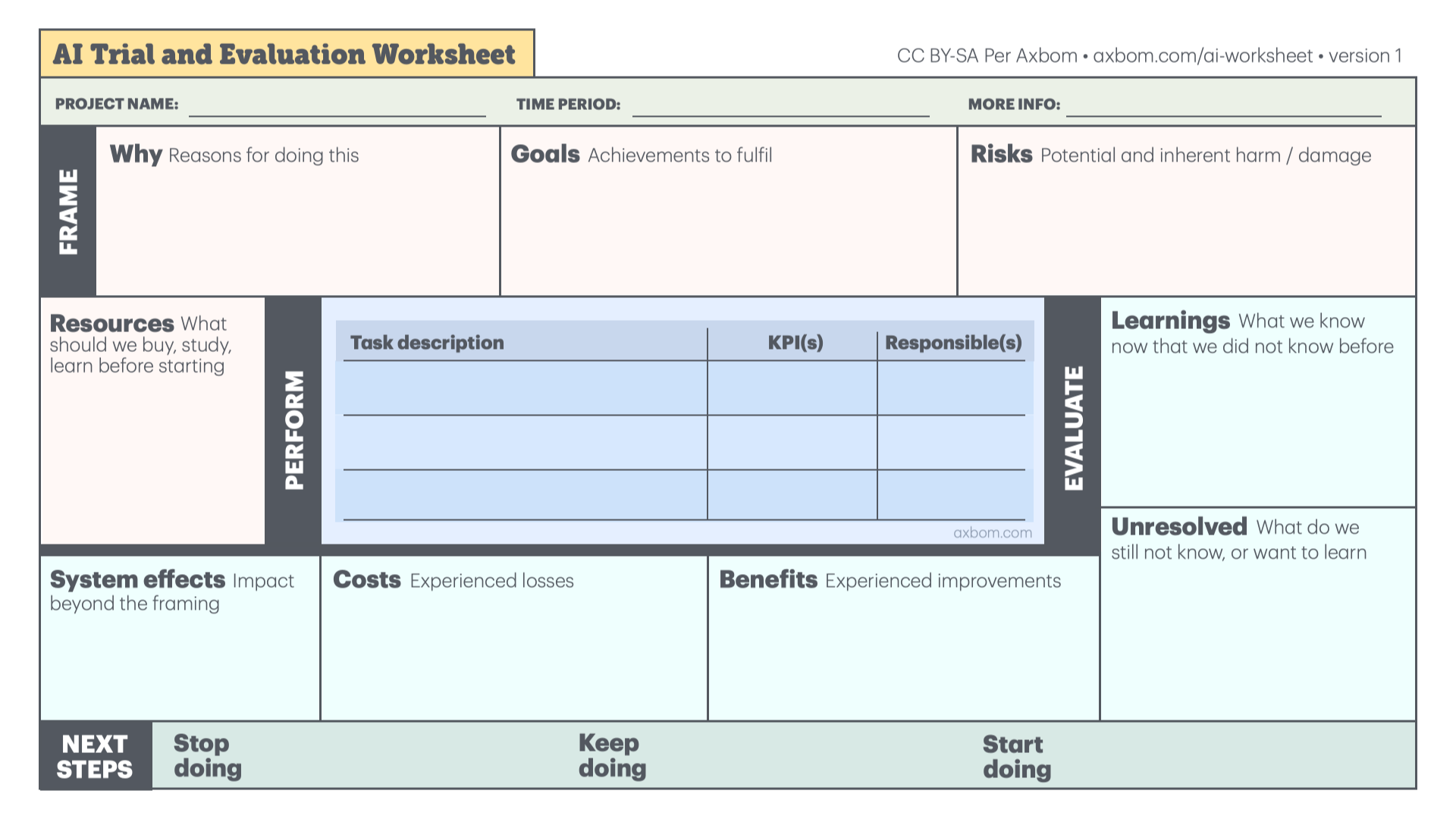
AI Trial and Evaluation Worksheet
Questions and topics that should be part of any AI analysis. Everything from necessary preparation to steps for promoting change. Use it for planning and analysis of your work.
The worksheet gives you dependable framework for learning in the process of testing new tools, and a format for sharing and applying those learnings.
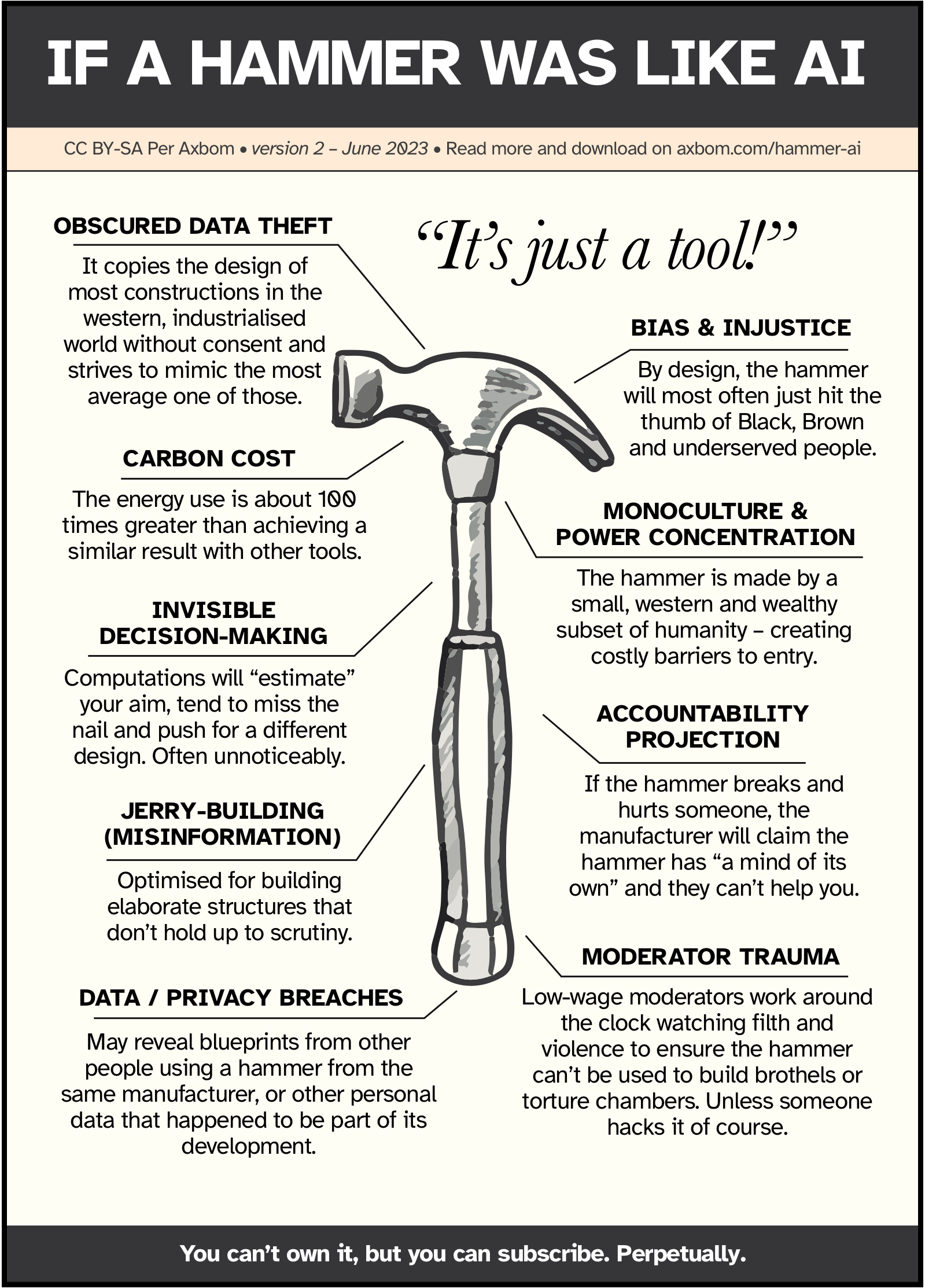
Poster: If a hammer was like AI
Get your own copy of the widely share poster. This satirical analogy challenges the common tech-industry defense that "AI is just a tool, like a hammer, and can be used for good or evil". Comparing AI to a traditional tool is deceptive; a simple hammer doesn't have the systemic, extractive, and unpredictable flaws that AI brings to the table. Read more.
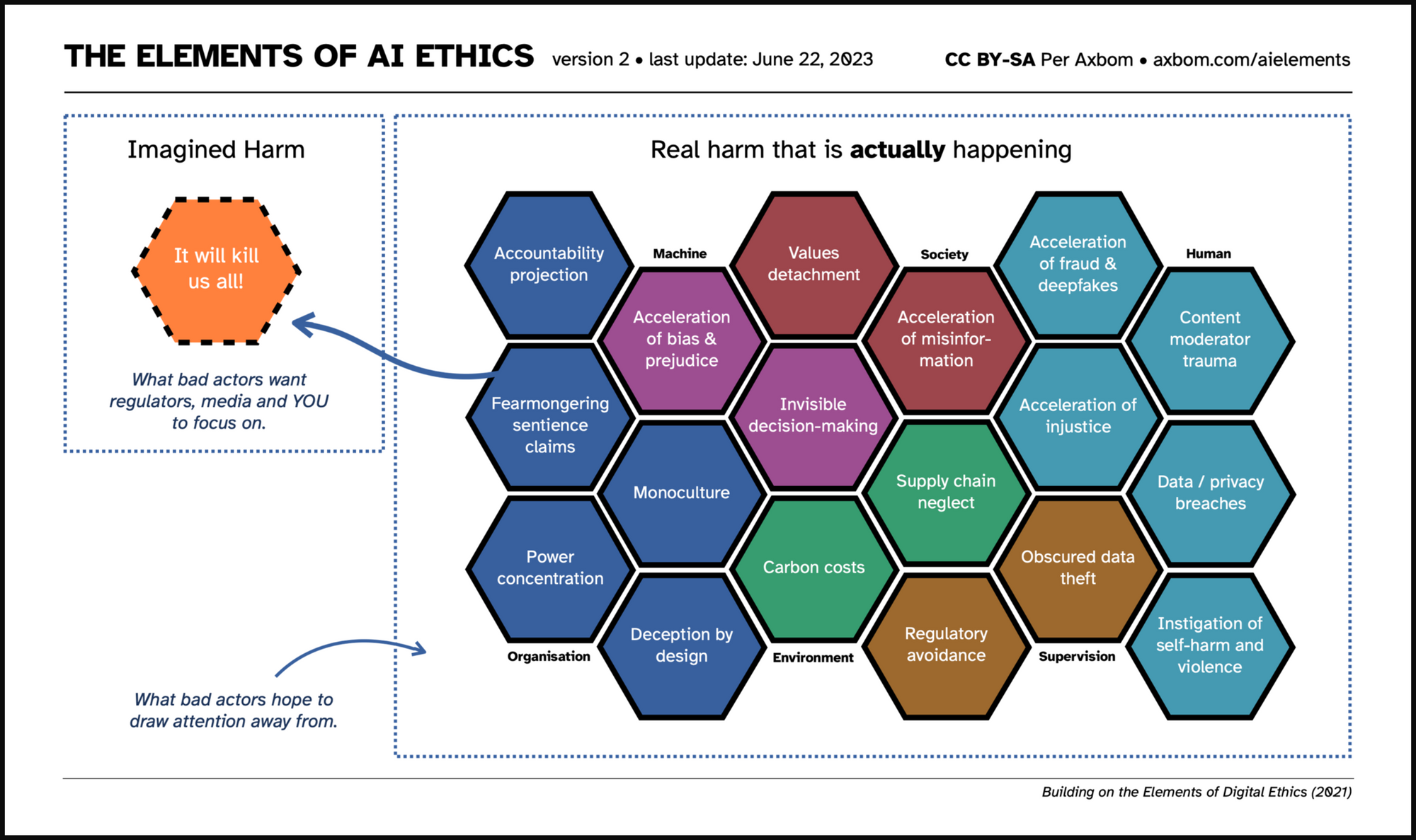
The Elements of AI Ethics
In the chart The Elements of AI Ethics I map out harms that we are already seeing reports of, that have been ongoing and many of which were predicted before they happened. As a tool it can provide guidance and talking points for understanding how to prioritise your work with "smart" tools, and acknowledge that all teams that deploy or make use of AI need a mitigation strategy for many different types of harms. A focused version of The Elements of Digital Ethics.
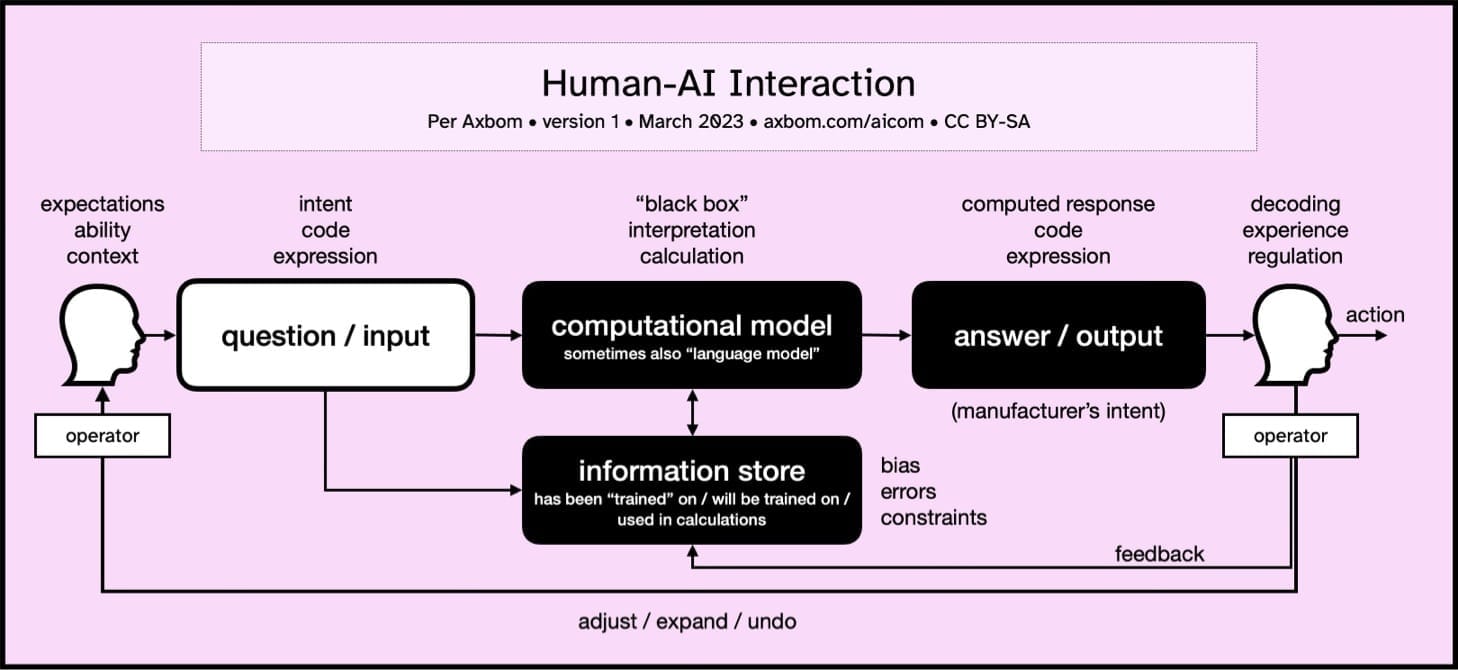
Human-AI Interaction Model
The diagram uses a communication science perspective to explain how–in the use and application of these AI tools–you can make an effort to improve, for example: comprehensibility, satisfaction and benefit.
It is useful in implementation planning, design decisions, communicative efforts and training.
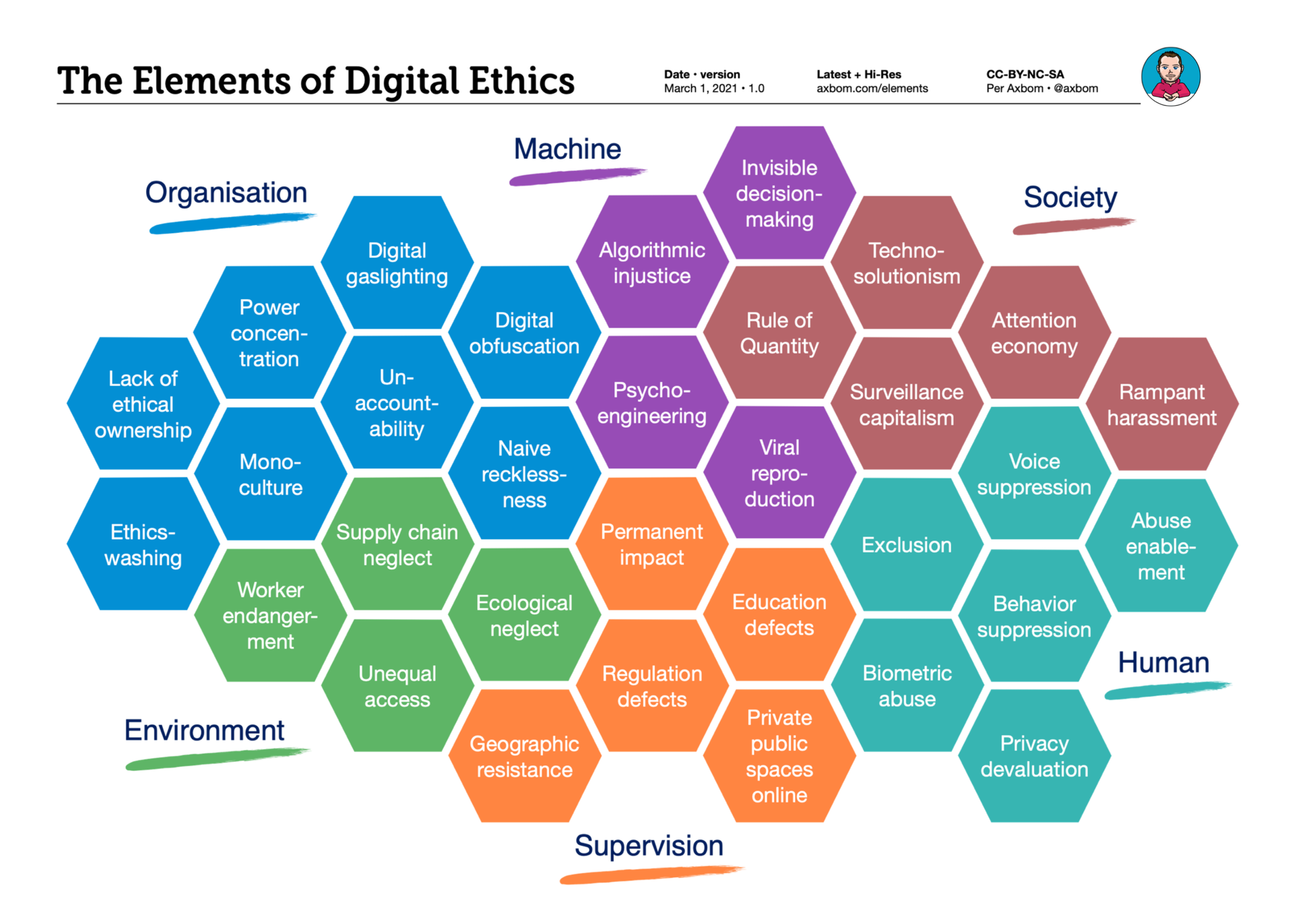
The Elements of Digital Ethics
A summary of the many ways digital holds potential for negative impact. The chart boosts awareness and encourages more careful and considered choices in a digital world. Feel free to use the chart as an everyday tool, as a conversation starter and as an outline for teaching.
The chart can be used as an artefact to spark discussion and serve as a reference when doing risk assessments. I also use it to plan lessons for my courses. Read more.